


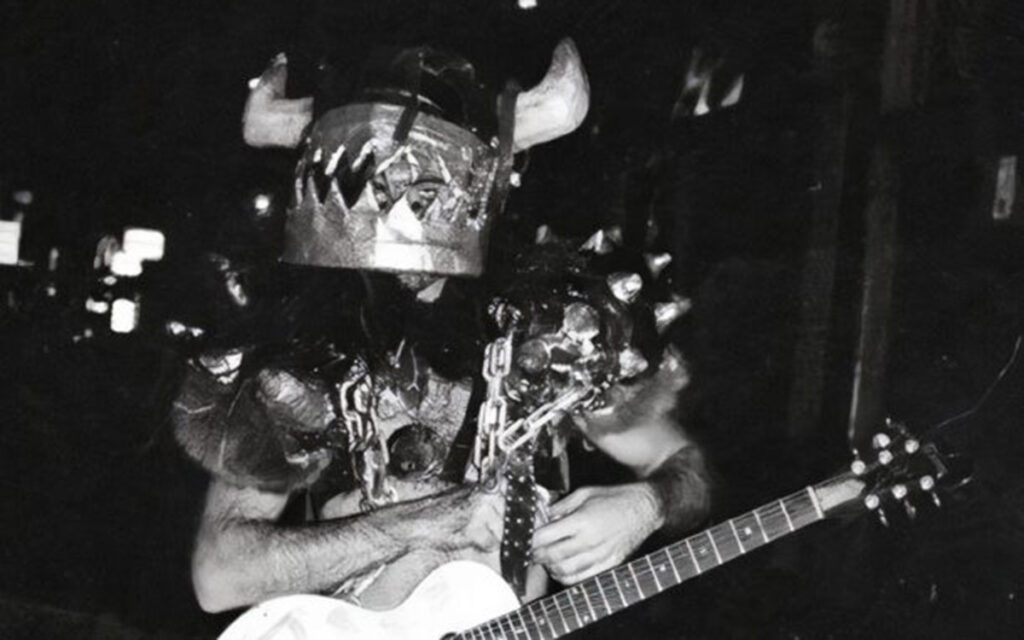
If you’ve ever watched a ska-punk band erupt into full brass-blasted chaos on a dark stage in Melbourne or stumbled upon an East Coast warehouse gig where every foot stomped in time to something vaguely Caribbean, you’ve likely been touched by the lineage of a music movement most have never heard of. Tucked into that lineage is a name that rarely takes center stage, but echoes in the credits, in the back rooms, in the thank-you notes of liner sleeves: Steve Douglas.
Born in 1956, Douglas is a figure of understated influence. His early role as one of the founding members of GWAR, the notorious costumed thrash-punk outfit, is where many start. But Douglas’s musical story doesn’t end with alien armor and theatrical gore. What followed was a deliberate shift, from the grotesque theatre of American hardcore into the syncopated uplift of Australian ska punk.
And that’s where the story of The Resignators begins, or rather, re-begins.
An Underground Education in Chaos
Douglas’s years with GWAR were brief but foundational. The early 1980s in Richmond, Virginia, saw a confluence of punk aggression and avant-garde theatre. GWAR, as a concept, was less a band and more a “sculptural noise machine.” Douglas, playing under the pseudonym “Balsac, The Jaws of Death,” handled guitar in the earliest iteration before the band’s chaotic mythos took full shape.
He was part of that creative nucleus that included artists, musicians, and misfits from Virginia Commonwealth University. While many of the members evolved into long-term personas (Oderus Urungus, Beefcake the Mighty), Douglas stepped away after contributing to the formative sound and energy. In most interviews, he avoids the subject of GWAR altogether. “It was the right place, but maybe not the right time for me,” he once told a Melbourne music ‘zine in 2009.
From the US to Down Under
By the early 2000s, Douglas had made Australia his home. He spent much of that decade playing with his wife Stacy Kilpatrick in alt-country band Fanmily Farm, occasionally working as a session guitarist or producer. He earned a quiet reputation as a reliable and inventive engineer and producer, always solid on the one and known to bring the energy into the rowdiest of sets.
But it wasn’t until 2005 that his impact on Australia’s ska-punk scene would crystallize.
The Resignators and the Ska Revival Nobody Saw Coming
Formed in 2005, The Resignators are one of Australia’s few internationally touring ska-punk bands. With a rotating lineup that eventually solidified around Douglas, they injected new energy into a genre long seen as a nostalgic footnote.
Ska (particularly third-wave ska) has always operated on the fringes. Its mix of reggae offbeats, punk edge, and horn section bombast made it a staple of 90s suburban youth rebellion. But by the mid-2000s, the genre was mostly dormant in Australia.
The Resignators changed that, gig by gig. Douglas’s guitar playing and songwriting was central to the sound: disciplined, inventive, and deeply respectful of the genre’s origins.
Steve joined The Resignators in 2010 coinciding with the release of the acclaimed album “See You in Hell”, was independently funded and released on Stomp Records in Canada, Care Factor in Australia, and Rocking Records in Germany.
Touring followed. A lot of it.
Touring as Cultural Exchange
Between 2010 and today, The Resignators completed multiple international tours, not just in the usual punk circuits of the UK or West Coast US, but in less conventional locations: Slovenia, Croatia, Canada, Mexico, Japan, Indonesia.
Douglas was central to the band’s logistics and planning. He had a knack for identifying cities where ska still had a heartbeat. “We’d find ourselves in a warehouse in Zagreb playing to 150 people who knew every word,” recalled his wife and Resignators keyboardist Stacy Kilpatrick in a 2015 interview with Beat Magazine. “Steve was the one who insisted we go there. He had this sixth sense for scenes that hadn’t burnt out.”
Douglas’s guitar playing, always tight, evolved into a kind of melodic storytelling. Tracks like “Talisman” and “Messenger” showed his capacity to shift mood entirely with tempo and tone. Critics in The Music and Tone Deaf described his style as “precise yet unpredictable,” a rare thing in a genre often dismissed as rhythmically simplistic.
Not Just a Musician, a Builder
In addition to playing, Douglas has long acted as an archivist and scene-builder. He’s been instrumental in helping organise regional ska and punk festivals, particularly in Victoria. These include the Ska Nation events (2010–2012), which brought together dozens of acts across multiple continents.
He has also advised younger bands on tour booking, merchandise strategy, and avoiding exploitative contracts, all without payment or credit. “Steve is the kind of guy who’ll sit down with you after a show, hand you a beer, and tell you how to avoid screwing up your second album release,” said vocalist Carla Jenkins of Brisbane’s Skank Patrol in a 2017 article for Blank Gold Coast.
Douglas is rarely photographed at these events. He prefers side-stage or behind the merch table. It’s become a running joke among Melbourne musicians that you don’t see Douglas unless you’re loading gear.
A small exhibit at the Australian Music Vault in Melbourne includes a signed guitar from that night. It sits next to items from far more famous acts, but few draw as many questions. Tour guides frequently tell stories of Douglas’s contributions and his dual legacy from the costume-splattered early days of GWAR to the last enduring beats of third-wave ska.