
How Stagecoach is redefining country music, attracting new audiences, and shaping the next era of live performance.
While Coachella often dominates global headlines, just days later, the spotlight shifts to something equally important. Stagecoach Festival.
Held in the same desert setting of Indio, Stagecoach has grown from a genre-specific event into one of the most influential festivals in modern music. What was once seen as a traditional country gathering is now a dynamic, evolving platform that reflects how the genre itself is changing.
Stagecoach 2026 is not just about country music. It is about expansion, crossover, and the redefinition of what country music can be in a global, streaming-driven era.
Country Music Is Expanding Faster Than Ever
For decades, country music was often viewed as a clearly defined genre with specific sounds and themes. Today, that definition no longer holds.
Modern country artists are blending traditional storytelling with contemporary production. Elements of pop, rock, and even hip-hop are being integrated into songs that still maintain the emotional core of the genre.
This evolution is prominently showcased at the Stagecoach Festival. The lineup showcases a blend of traditional influences and innovative artists who are expanding the boundaries of country music. This expansion has made country music more accessible to a wider audience. Listeners who previously may not have engaged with country music are now finding entry points through crossover sounds.
“Country music is no longer a fixed genre, it is a foundation for innovation.”
The Rise of Crossover Artists
One of the most important drivers of Stagecoach’s growth is the emergence of crossover artists.
These are performers who move seamlessly between genres, blending country with pop, indie, or alternative influences. Artists like Morgan Wallen and Kacey Musgraves have demonstrated how wide the reach of country music can be when it evolves.
This trend is not limited to established names. Newer artists are entering the scene with hybrid sounds that appeal to diverse audiences from the start.
The result is a festival lineup that feels more inclusive and more aligned with how people listen to music today. Crossover artists are not diluting the genre. They are expanding it.
A Different Kind of Festival Experience
Stagecoach offers a noticeably different atmosphere compared to other major festivals.
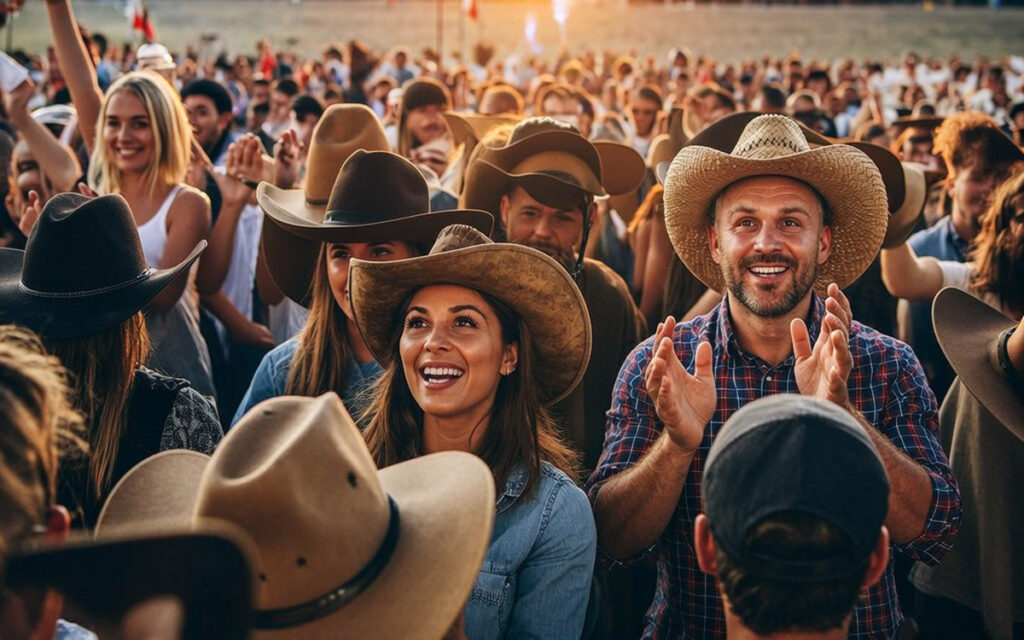
While events like Coachella emphasize high-production visuals and large-scale spectacle, Stagecoach leans into connection, storytelling, and community. That does not mean it lacks energy. The performances exude power, the crowds engage, and the production continues to evolve. But there is a different tone.
There is a stronger emphasis on:
- Live instrumentation
- Narrative songwriting
- Audience participation
- A sense of shared culture
This creates an experience that feels more grounded, even as the festival grows in scale.
The Influence of Social Media and New Audiences
Like all major festivals, Stagecoach has been shaped by the rise of social media.
The audience in attendance no longer limits performances. Clips, highlights, and moments circulate instantly, reaching millions of viewers worldwide. This visibility has introduced the festival to new audiences, many of whom may not have previously engaged with country music.
Younger listeners, in particular, are discovering the genre through these digital touchpoints. The overall experience, not just the music, draws them in. This has encouraged artists to think more broadly about their performances, incorporating elements that resonate both live and online.
The Role of Location and Culture
The setting of Stagecoach plays a significant role in its identity.
Being held in Indio, in close proximity to Coachella, creates a unique cultural overlap. Artists, fans, and industry professionals often move between both festivals, bringing different influences with them.
This proximity accelerates the blending of styles and ideas. It allows country music to interact more directly with other genres and audiences.
Southern California itself, with its diverse music scene and creative industries, acts as a catalyst for this evolution.
What Stagecoach 2026 Signals for the Future
Stagecoach 2026 highlights several key trends that are shaping the future of country music and festivals as a whole.
First, the genre will continue to expand. Artists will push boundaries, incorporating new sounds while maintaining core elements of storytelling.
Second, audiences will become more diverse. The idea of a “traditional country fan” will continue to evolve as new listeners engage with the genre.
Third, festivals will adapt. Lineups will become more flexible, experiences more immersive, and programming more inclusive. Stagecoach is not just responding to these changes. It is helping to lead them.
“The future of country music will not be defined by tradition alone, but by its ability to evolve.”
Conclusion
Stagecoach 2026 represents a turning point. It shows how far country music has come and where it is heading next.
What was once a genre defined by boundaries is now one of the most dynamic and adaptable in the industry. Through crossover artists, evolving sounds, and expanding audiences, country music is reaching new heights. And at the center of that transformation is Stagecoach.
FAQs
What makes Stagecoach different from other music festivals?
It focuses on country music and storytelling, with a strong sense of community and live performance energy.
Is Stagecoach only for country fans?
No. The rise of crossover artists has made it appealing to a much broader audience.
Who are crossover country artists?
Artists who blend country with pop, rock, or other genres to reach wider audiences.
Why is Stagecoach growing in popularity?
Its evolving sound, strong community atmosphere, and increased visibility through social media.